
Our country is so behind... on everything.
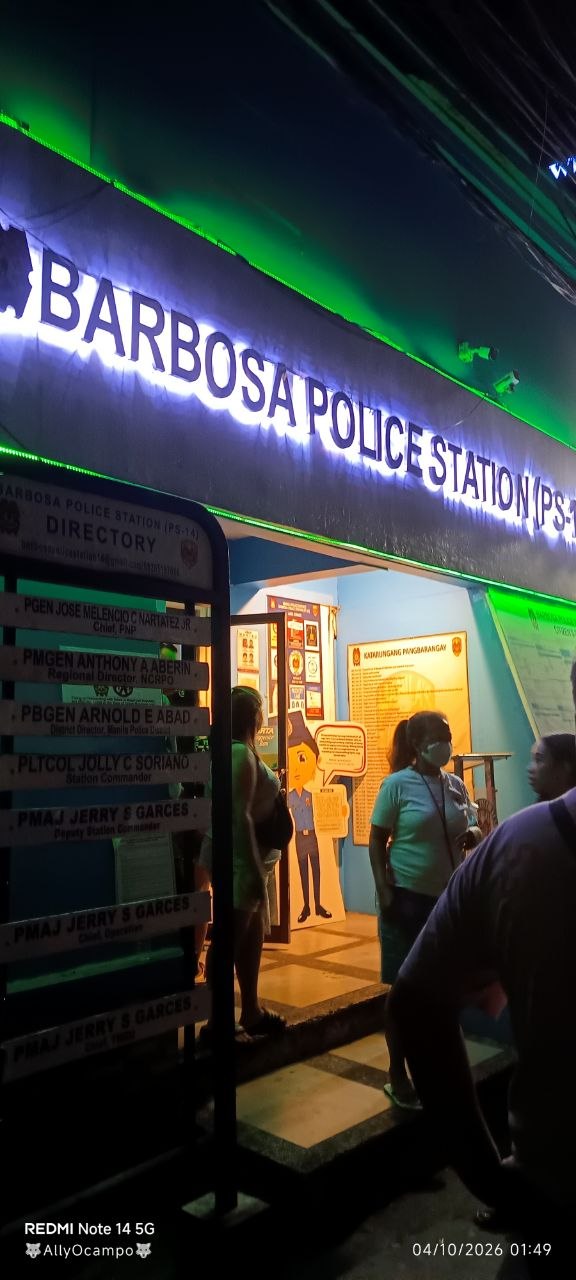
On Thursday, April 9, at 10:30 in the evening, my father was taken by police officers for gambling at a wake. At that time, I was on my graveyard shift, unaware of what was happening at home. It wasn’t until my first 15‑minute break around 11 PM that I saw my sister’s message: Dad has been brought to jail.
Panic set in. I pleaded with my managers to let me leave work so I could be with my family. By the time I reached Barbosa Station 14 precinct, my father was already being led inside a cell. I didn’t need to see his face to recognize him—his back, slightly hunched as he walked toward the entrance, was enough.
I called out to him. He turned, and in that brief moment, I saw everything: sadness, shame, and the weight of regret in his eyes. He tried to speak, but his words were muffled by the noise around us. The only thing I caught was his question—Why did you leave work?
I wanted to run to him, to pull him out of that place, but I forced myself to stay still. Never in my life did I imagine watching my own father walk into a jail cell—and realizing there was nothing I could do to stop it.
I’ve faced difficult moments before. When I miscarried with only two thousand pesos in my pocket and had to undergo a dilation and curettage, I found a way. When I clashed with someone everyone believed was a killer, I managed to stand my ground. In every tight situation, I always scraped together strength, resourcefulness, or sheer willpower to survive. But not this time.
That night, I felt useless. All I could do was volunteer my time—bringing food, offering what money I had, and helping prepare for bail—while my sister sought out anyone who might lend us support. Yet even that hope was delayed. Everyone arrested at the wake had to go through the inquest process, meaning we wouldn’t know the bail amount, let alone pay it, until Monday.
At eight in the morning, they brought my father to Manila City Hall. The Fiscal issued a resolution right then and there, yet we still couldn’t take him home. My sister explained that the division chief—the final signatory—was unavailable. One missing person meant my father, along with everyone else picked up that day, had to remain in jail until Monday. And even then, release was uncertain.
But the delay wasn’t the worst part.
Inside Barbosa Police Station, the jail was suffocatingly crowded. The first time I approached the cell to speak with my father, I was stunned. Men were packed so tightly that not everyone could sit at once. They rotated positions—some standing while others sat, then switching when fatigue set in. Those lucky enough to lie down had to stay frozen in place, while the rest slept sitting upright.
My father, frail and elderly, was spared the men’s cell. Instead, he was placed in the women’s cell. It was less populated—only two women—but no less claustrophobic. The space could barely fit two people lying flat. A third body meant someone had to curl into a fetal position or sleep sitting up. That was how my father spent Thursday night. And Friday night. And how he will continue to sleep until the system decides he can go free.
One absent signature. One overcrowded cell. And countless lives forced into indignity.
What they did was technically wrong—society frowns on gambling. But in truth, they weren’t hurting anyone. They were simply passing the time at a wake, surrounded by family, my father’s relatives. The stakes were laughably small, just coins tossed in to keep boredom at bay during the long, sleepless nights of mourning.
What stung the most was not the act itself, but the silence of those who should have cared. Our barangay officials knew there would be an operation in our area. They could have warned us, or at least told the people to stop gambling at the wake. But they didn’t. These same officials who hovered around us during elections, shaking hands and offering smiles, vanished when it truly mattered.
Last night, I managed to leave work early, around four in the morning. I bought five orders of Pancit Canton, hoping to bring some comfort. But it was too early to visit, so I left the food with the front desk officer. Before I walked away, I caught sight of someone curled on the cold floor in a fetal position, a small towel covering his face. I knew instantly—it was my dad.
I stood there for a few seconds, staring, imagining the discomfort of trying to sleep in one unyielding position, night after night. That image will stay with me: my father, vulnerable and weary, enduring indignity while those with power chose silence.
At nine in the morning, I visited my father again, bringing food and money. What he told me shattered me: “Don’t post bail. We’re already in jail. There’s no point anymore.”
It wasn’t just resignation—it was shame. He knew I would be the one to post his bail, the daughter he never had a good relationship. I am the firstborn, the one who absorbed all the blows so he could be gentler with my younger sister. We’ve never seen eye to eye, perhaps because we are too alike. And yet, in that moment, I saw a man stripped of pride, quietly surrendering to a system that thrives on humiliation.
I don’t know how long he will remain imprisoned. But one truth has become painfully clear: our prison system—and, in fact, every system that governs this country—needs a complete overhaul.
The endless redundancies, the bureaucratic hoops designed not to protect but to frustrate, must be abolished. Our people deserve systems that are innovative, efficient, and humane. Systems that serve, not punish. Systems that make justice accessible, not impossible.
Until then, fathers like mine will continue to sleep on cold floors, daughters will carry the weight of their shame, and families will be crushed under the gears of a machine that was never built to care for them.
Our country can never truly progress if we continue to cling to outdated systems. As long as these broken structures remain, we will stay stuck—lagging behind while other nations surge ahead.
The Philippines risks becoming the nation the world laughs at, the one doubted, forgotten, and deprived of opportunities. How can we compete with global giants if we cannot even fix our own foundations? How can we demand respect abroad if we fail to take care of our own people at home?
There is so much to repair, but transformation doesn’t begin with sweeping promises. It begins with small, deliberate changes—changes that must happen now. Every redundant process, every bureaucratic hurdle that exists only to frustrate ordinary citizens, must be dismantled.
Our people deserve systems that are modern, efficient, and humane. Systems that serve, not suffocate. Systems that empower, not embarrass. Until we build that, we will remain trapped in the shadow of progress, watching the world move forward without us.
Connect
Chat with me about stories and ideas
© 2025. All rights reserved.