
Surrounded By Dungkrab
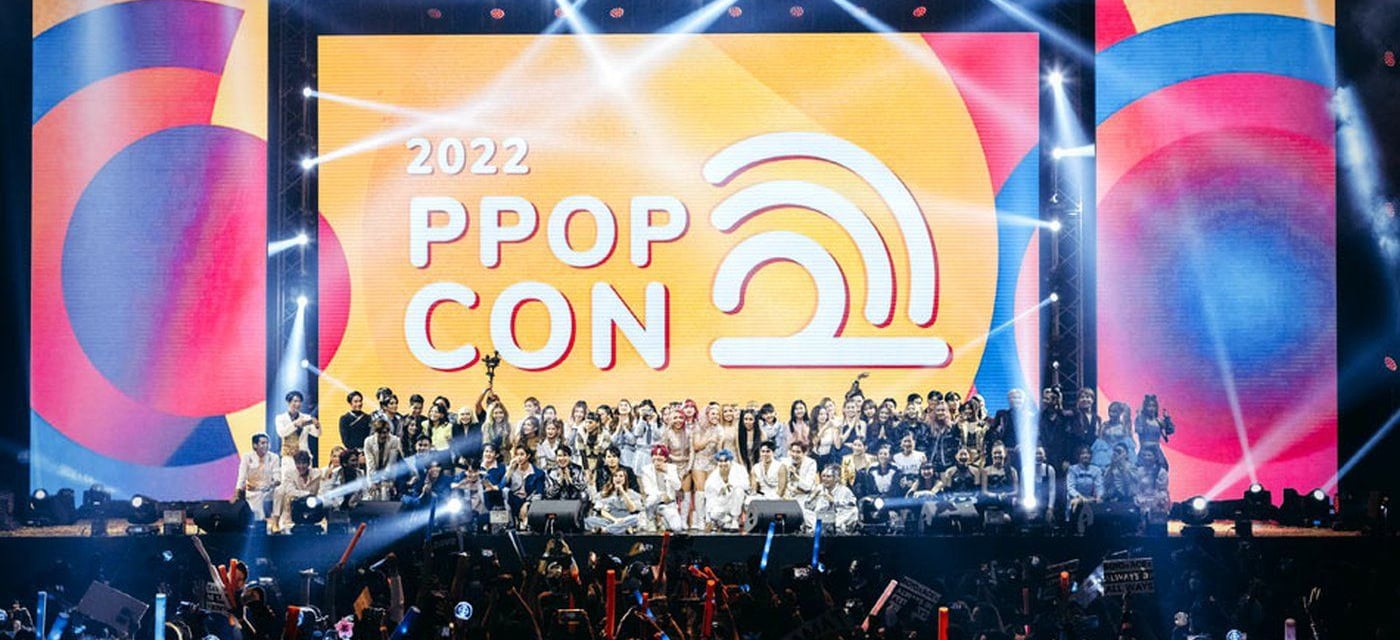
Because of the strategy to downplay SB19's achievement and relevace in the music industry, I did my research. I asked Copilot to search the internet to find out when the term PPOP was first used and this is what Copilot gave me. The term “P-Pop” (Philippine Pop) first began circulating in the late 2000s, coined largely to mirror the success of K-Pop and J-Pop. It was formally used by Viva Records as a sub-label during that period, though the genre only gained mainstream traction in the late 2010s with groups like SB19 and MNL48.
📌 Timeline of P-Pop’s Emergence:
Early 1970s–2000s: Pinoy Pop (OPM roots)
The broader term Pinoy Pop (sometimes shortened to P-Pop) referred to popular Filipino music emerging from OPM (Original Pilipino Music).
Acts like Side A, Neocolours, and True Faith shaped the sentimental pop sound of the 1990s and 2000s.
Late 2000s: First use of “P-Pop”
The label “P-Pop” was introduced to emulate the idol culture of K-Pop and J-Pop.
Viva Records launched a sub-label under this name, producing groups like Pop Girls and XLR8.
Despite the attempt, early P-Pop struggled due to limited industry support and perceptions of being “inferior copies” of Korean groups.
📌 2010s: Transition and Reinvention:
The term gained renewed relevance as production quality improved and idol-style training became more rigorous.
By 2019, SB19’s “Go Up” dance practice video marked a turning point, showcasing polished performances and authentic artistry that redefined P-Pop’s credibility.
2020s: Mainstream Recognition
Groups like SB19, MNL48, BINI, and KAIA solidified P-Pop as a global-facing genre.
Social media virality and fan-driven promotion became central to its rise, echoing the strategies of K-Pop but with distinct Filipino identity.
✅ Key Takeaways:
First usage: Late 2000s (Viva Records sub-label).
Roots: Derived from Pinoy Pop (1970s OPM movement).
Breakthrough: SB19’s rise in 2019 gave legitimacy and global visibility.
Current status: A thriving fan-driven industry, blending Filipino culture with idol-group aesthetics.
There are three main articles Copilot used as its reference:
The Truth About P-POP - by Philstar
According to the article, the term PPOP was first used when VIVA Records created a sub-label in the attempt to ride the coattail of the booming KPOP and JPOP industry. It provided a quick glimpse of the past and its evolutions, highlighting SB19 and MNL48 as the pioneers of the modern version of the sub-genre. It also pointed out the reason why the initial attempt of establishing PPOP wasn't successful. To highlight an excerpt from the article about SB19: "They were the first groups to embody the virtues of pop idol culture with an artistically accomplished vision: they write and co-produce their own stuff, they sing and dance seamlessly and harmoniously as a group, they have a compelling story to back up their talent, and they respect the form and craftsmanship of the genre. It was a cultural reset that forever changed the way people see P-Pop."
What is PPOP and What Might Have Caused Its Rise? - by Tatler
Despite the obvious minimal feature, the article also mentioned this excerpt: "One of the groups that pioneered the era of P-pop groups is SB19. They became the first Southeast Asian act to be nominated for the Billboard Music Awards and the first Southeast Asian act to make an appearance in the top 10 of the Billboard Social 50. Originally, they debuted under the Korean entertainment company SBTown but are now a self-managed group at 1Z Entertainment."
Pinoy POP - by Wikipedia
This article provided a more complete and fact-based history with links from different sources that searched online. It placed MNL48 and SB19 on the category it called: 2020s: The Rise of Pinoy idols groups and new generation of solo artists, stating:
"From the influence of K-pop and J-pop, a new era of Pinoy pop was born as P-Pop. The Philippines' first idol group MNL48, a sister group of the J-pop group AKB48, started a new era for Pinoy pop when they debuted in 2018. Following them is the all-boy idol group SB19 who also debuted in 2018. They are the first Filipino act trained by a Korean entertainment company under the same system that catapulted K-pop artists into global stardom. SB19 is considered to be the first Pinoy pop idol group to chart on the Billboard Next Big Sound and Billboard Social 50.[7] On November 20, 2019, SB19 made history by being the first Filipino artist to chart and debut on the Billboard Next Big Sound chart debuting and peaking at No. 5.[8] On December 3, 2019, the group broke the all-time record of the longest stay at the No. 1 spot of Myx Daily Top Ten with "Go Up" staying at the top spot for 53 non-consecutive days.[9] And on April 29, 2021, SB19 become the first Filipino and Southeast Asian act to be nominated in Billboard Music Awards for Top Social Artist along with BTS, Blackpink, Ariana Grande, and Seventeen.[10] It marked the first-ever appearance of a Filipino artist in the Billboard Music Awards. SB19's Where You At Tour was one of the first concert tour by a Filipino pop boy band. The tour held 10 shows in the country's major cities and in Dubai, New York, Los Angeles, San Francisco and Singapore."
Other articles referenced were:
A Comprehensive Guide to Pinoy Pop Music: History, Artists, & More
Tracing The Origins of P-Pop
A brief history of P-pop, from Anti-Marcos messaging to mainstream and back
BEYOND THE BEST: The Emergence of P-pop as The Voice a New Filipino Generation
The History and Future of Filipino Pop, from Folk Love Songs to the P-Pop Wave
Riding The Hallyu Wave: PPOP Influence on Filipino Culture
Every article, every feature, every commentary on SB19’s rise seems to converge on one undeniable truth: they ignited the breakthrough of PPOP into the global scene. Their early achievements didn’t just put the Philippines on the map—they turned the world’s gaze toward Filipino artistry, proving that we are more than just powerhouse balladeers or singers of heartbreak. SB19 showed that our music carries depth, diversity, and vision.
Their success became a door flung wide open. Aspiring Filipino artists suddenly had a path to follow, and industry gatekeepers began to see what fans already knew: the Philippines could achieve what South Korea had done with K-pop. SB19’s journey became both blueprint and beacon.
What makes their story even more remarkable is its resilience. When the pandemic struck, they didn’t fade into silence—they found ways to stay connected, relevant, and present for their fans. When they temporarily lost the right to their name, they didn’t retreat. They stood on stage, introduced themselves as individuals, and kept performing with the same fire. Even before formally parting ways with their old management, they were already laying the foundations of their own artist management, proving that their vision extended far beyond survival—it was about building something lasting.
SB19’s career has never dwindled; it has only evolved. And in that evolution lies the true measure of their legacy: not just as performers, but as pioneers who reshaped the future of Filipino music.
This five-member group has stood at the vanguard of the PPOP Movement, carrying the Philippine flag with pride and honor. It is nothing short of absurd that anyone would attempt to minimize their achievements or rewrite the history of modern PPOP.
Before SB19, every attempt to form a Filipino idol group was dismissed as a mere K-pop imitation—and truthfully, many were. Even SB19 faced the same label in their early days. Their aesthetics, sound, and even their introductions aligned with the K-pop system, and for a time, that perception was not unfounded.
But those days are long gone. When SB19 entered their Pagsibol era, they shed every trace of the K-pop mold. They reintroduced themselves with a new identity, shattered the stigma, and proved that they were not simply borrowing a system—they were building a movement. In doing so, they became the living embodiment of Filipino pride, carrying the flag before the media even recognized and celebrated PPOP.
SB19 did not just adapt; they transformed. And in that transformation, they redefined what it means to be a Filipino idol group—not as copycats, but as pioneers.
A’Tin, SB19’s devoted fandom, was the first to stand shoulder-to-shoulder with the quintet in the fight for PPOP’s identity. They were the ones who challenged the dismissive “K-pop Filipino Boy Group” label, refusing to let SB19 be defined by borrowed terms.
Before BINI, BGYO, Alamat, and the many groups that followed, there was SB19 and A’Tin—fighting the battle virtually alone. Long before mainstream media acknowledged them, SB19 had already laid the foundation for what they envisioned PPOP to represent: pride, raw talent, authenticity, and humility.
Of course, as any community grows, so do its challenges. With PPOP reaching new heights, detractors have emerged—some willing to distort narratives to erase SB19’s role. But history is not so easily rewritten. The evidence remains, and the truth endures: PPOP as we know it today would not exist without SB19.
SB19 and A’Tin were not just participants in the rise of PPOP; they were its architects. And no matter how much others try to revise the story, the legacy they built will always stand as the cornerstone of the movement.
Fame and success never changed SB19. From the very beginning, their vision was clear: to uplift the Filipino music industry and show the world what true Filipino talent looks like—unapologetic, bold, fierce, and loud. They never saw the spotlight as theirs alone. Instead, they dreamed of pulling others up with them, even when others tried to pull them down.
That generosity flowed naturally into A’Tin, a fandom defined by care, kindness, and resilience. Long before the accolades, SB19 dreamed of a P-pop convention where every group could showcase their artistry. In 2022, that dream became reality. In one unforgettable moment, SB19 called all the groups backstage to join them on stage. It wasn’t part of the official program, but it was quintessential SB19—eager to share the spotlight. Despite being the biggest act there, they almost disappeared into the background, sitting on the stage floor while their peers shone.
When PPOPCON 2023 was cancelled, it was A’Tin who stepped up. With no funds, no venue, and no official backing, they organized PPOPCOM—a fan-led celebration of P-pop’s rise. They weren’t paid, they weren’t sponsored, but they made it happen. A’Tin were the first to fight for P-pop Rise, and yet they became the most villainized fandom simply for demanding respect for the group that started it all.
SB19 and A’Tin’s story is not just about music—it’s about vision, generosity, and community. Together, they remind us that movements are built not by chasing numbers, but by lifting others, even when the world tries to push you down.
SB19’s rise was never a fluke, nor a lucky accident. Critics often point to that one viral moment—the Go Up dance practice video shared by a Twitter user—as the spark that lit their fame. And yes, that post mattered. But the deeper truth is this: she shared the video because the choreography was flawless, the movements precise, and the energy undeniable.
You can’t auto-tune a dance routine. There are no filters, no edits, no shortcuts. It’s all or nothing—you either captivate the crowd or you don’t. SB19 captivated her, and through her, countless others. What people saw was not just five young men dancing, but five dreamers fighting with everything they had. That authenticity became the heartbeat of P-pop’s modern era.
By 2020, their momentum translated into a cascade of awards: People’s Choice Award, Favorite Breakthrough Artist of the Year, Promising Recording/Performing Group, Song of the Year for Go Up, Artist of the Year, New Artist of the Year, Wishclusive Pop Performance of the Year, Wish Breakthrough Artist of the Year, and Wishers’ Choice Award. Each accolade was proof that their artistry resonated far beyond a single viral clip.
And by 2021—just their third year as a group—SB19 broke into the global stage with nominations for Billboard’s Top Social Artist and Best Southeast Asian Act. They didn’t win, but the nominations themselves were monumental. For a country often overlooked in the global music conversation, SB19’s presence on that list was a declaration: the Philippines had arrived.
SB19’s story is not about luck. It’s about discipline, artistry, and the relentless pursuit of a dream. Viral moments may open doors, but only true talent keeps them open.
SB19’s music isn’t the easiest fit for the mainstream Filipino ear. Our country has long been dominated by love ballads and band-driven anthems, shaped by decades of tradition and cultural influence. Layered into this is the weight of Spanish heritage, especially in how masculinity is defined—stoic, restrained, and rarely expressive in ways that challenge convention.
Against this backdrop, it’s no surprise that idol groups face resistance. For many Filipinos, it’s still uncomfortable to openly admire men who wear makeup, embrace bold fashion, and aren’t afraid to show a softer, more vulnerable side. SB19 embodies all of that unapologetically, and while it inspires countless fans, it also fuels criticism.
Spotify numbers often become the weapon of choice for detractors. SB19’s monthly listeners aren’t as high as some viral acts, and bashers love to point out the contrast—especially when a girl group skyrocketed to 7 million listeners and crossed the billion-stream mark. But here’s the thing: numbers alone don’t tell the whole story.
SB19’s journey is about breaking cultural molds, not chasing easy metrics. Their artistry challenges long-held notions of masculinity, their performances demand respect for discipline and craft, and their fanbase proves that authenticity can thrive even in a landscape that doesn’t always welcome it. In a country where idol culture was once dismissed outright, SB19’s presence itself is a revolution.
On Spotify, the rules of the game aren’t always as straightforward as they seem. When a song auto-plays on your device—even for less than a minute—you’re automatically counted as part of that artist’s monthly listeners for the next 28 days. And here’s the kicker: Spotify offers paid promotional features that can push songs into more playlists and feeds. With enough money, visibility becomes easy.
Add to that the fact that streams are counted even if a track plays for under a minute, and suddenly, high stream counts and inflated monthly listeners don’t look so hard to achieve. After all, how difficult is it to create a free Spotify account? In today’s digital landscape, metrics can be manipulated. Followers, likes, shares, reposts, even views—these can all be bought cheaply in black markets like Telegram.
But here’s the real question: do those numbers last? For many viral acts, the answer is no. Their listener counts spike, then fade just as quickly.
SB19 tells a different story. From the moment they crossed 1 million monthly listeners in 2021, that number has never dipped below the mark. Year after year, their listener base has remained consistent. That kind of stability isn’t the product of algorithms or paid boosts—it’s the result of genuine loyalty, fans who stay, and music that continues to resonate.
In an industry obsessed with numbers, SB19 proves that consistency and authenticity are worth more than inflated metrics. Viral fame fades; real support endures.
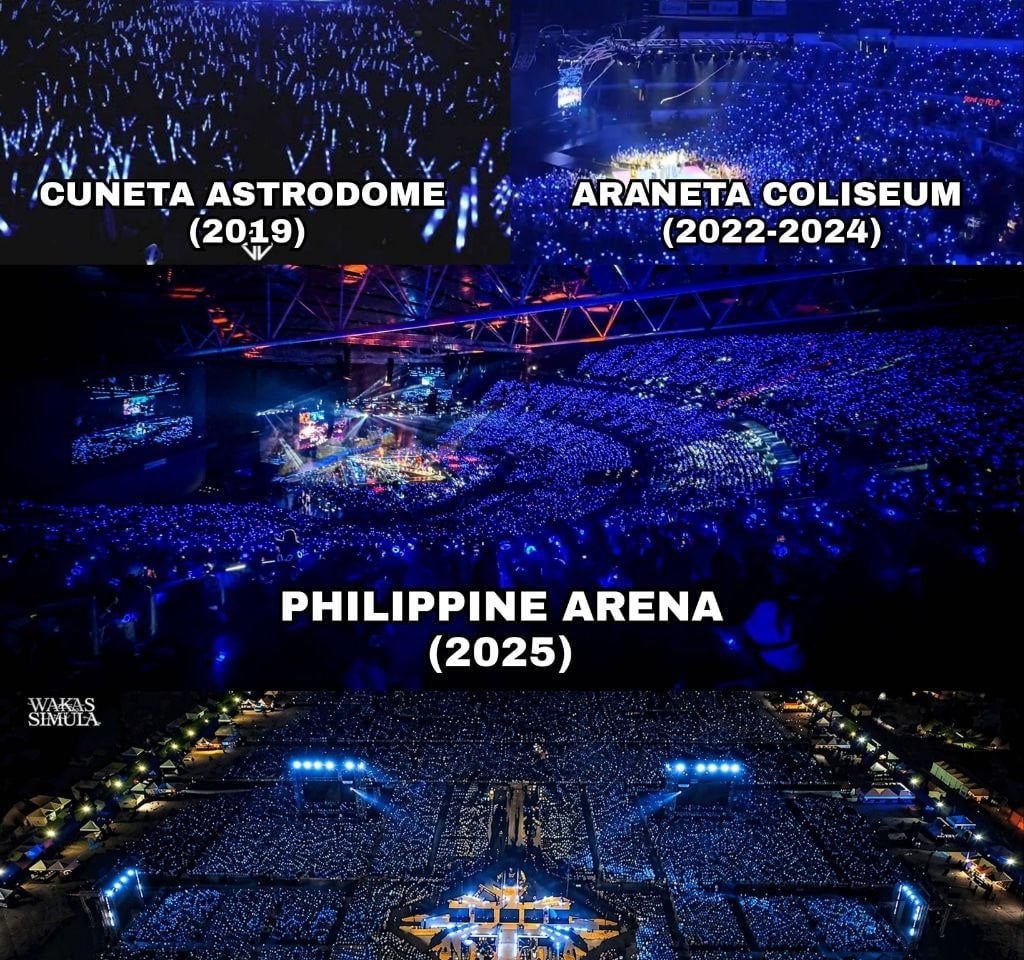
SB19 doesn’t boast 7 million Spotify monthly listeners—in fact, they don’t even break 2 million. But what they do have is something far more powerful: a fandom whose dedication only grows stronger with time. What they have is the curiosity of people who show up to see them live, and the flood of praise that follows every performance.
From their concert at Cuneta Astrodome in 2019 to the monumental Wakas at Simula: The Trilogy Finale at SMDC Festival Grounds in April 2026, SB19’s crowds have never dwindled—they’ve only multiplied. They sold out the Philippine Arena for two nights, with the first night gone in just seven hours. The ticket queue reached over 115,000 hopeful fans, a testament to demand that no digital metric can capture.
Every year since their Araneta Coliseum shows began, Filipino fans abroad have flown home, and foreign fans have crossed oceans, just to witness the Kings of P-pop on their home turf. For their latest concert, overseas Filipinos returned in droves, while international fans braved solo travel to be part of history.
SB19 may not be the most-streamed Filipino group on Spotify, but they are undeniably the strongest, most successful, and most relevant. Legends like Gary Valenciano, Regine Velasquez, Ogie Alcasid, and Dingdong Avanzado have openly praised them. They are, quite literally, the celebrity of celebrities. Many icons in the industry have expressed their desire to collaborate with SB19, recognizing what sets them apart: true, raw, and undeniable artistry.
In a world obsessed with numbers, SB19 proves that success isn’t measured in streams—it’s measured in loyalty, impact, and the kind of artistry that inspires generations.
Yes, SB19 doesn’t have the “best” digital metrics—and that’s because metrics can be manipulated. Selling out arenas can be faked with a press release, and Spotify streams can be inflated by autoplay or paid promotion. High monthly listeners look impressive on paper, but how many of those millions are genuine supporters willing to spend on the artist?
SB19 may not dominate Spotify charts, but they’ve placed seven songs on Billboard’s World Digital Song Sales chart—a feat that speaks to real, global resonance. Their concerts, unlike the manufactured “sold-out” claims of others, are legitimately packed. A’tin consistently clears out merchandise, whether it’s Felip’s leather jackets worth thousands or the group’s brand collaborations.
What SB19 has built is not a career chasing trends or numbers, but one rooted in loyalty and artistry—strong enough to withstand even economic crises. They can still sell out massive venues like the SMDC Festival Grounds, drawing fans from across the world who fly in just to be part of history.
SB19 doesn’t fit neatly into charts or digital graphs. They are too bold, too explosive, and too enduring to be reduced to numbers. Their success is measured not in streams, but in the roar of live crowds, the devotion of fans, and the respect of legends who recognize their artistry.
Connect
Chat with me about stories and ideas
© 2025. All rights reserved.