
The King of Pop
A fan's perspective
MICHAEL JACKSON
Ally Ocampo
6/25/202613 min read
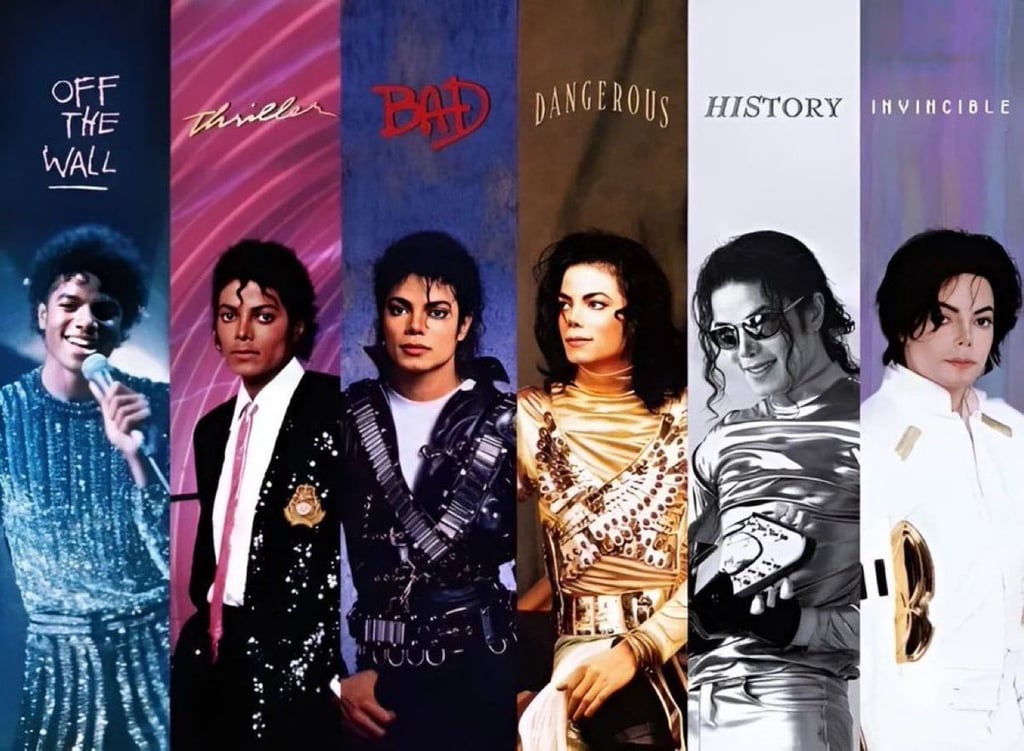
They say great power comes with great responsibility—and few embodied that truth more profoundly than Michael Jackson. Born with an innate gift to sing and dance, his angelic voice and electrifying presence were more than entertainment; they were instruments of change, carrying messages of hope, unity, and healing to a world in need.
Like every hero’s journey, his life was marked by trials and tribulations. He was far from perfect—no human ever is—but beneath the spotlight and the scrutiny, I believe he remained one of the kindest, purest souls to ever walk this earth. His artistry was not just about music; it was about touching hearts, bridging divides, and reminding us of our shared humanity.
In this blog, I will share my perspective, my beliefs, and my reflections on the aspects of Michael Jackson’s life that the world witnessed—an attempt to honor the man behind the legend and the legacy he left behind.
—Childhood—
Growing up with many siblings, especially as the third youngest, isn’t easy. The eldest gets most of the strictness and responsibility, while the youngest receives the most love and attention. Parents may not mean for it to be that way, but it often happens. Middle children usually end up with less of both—less love, less attention, less strictness. Michael Jackson was always unique, something even his family may not have fully understood, especially when Joseph Jackson pushed his children to work from a very young age. Michael performed in clubs where no child should have been exposed to things he couldn't comprehend, missing out on the experiences kids his age should have had. I’m sure it left a negative mark on him. As a younger sibling, it’s natural to want to show off, join in on what older siblings do, and please those around you. That’s likely why young Michael proved to his father he could do what his older brothers did—only better—hoping it would earn him a place in the family and his father’s attention.
What child doesn’t crave a father’s love and attention? Sometimes, to get it, a child might act out or follow in his father’s footsteps, but in the Jackson household, earning their father’s attention meant working like adults. Michael later admitted that he would fight back when his father hit him or try to run, which often led to him getting beaten more than his siblings—a clear sign of seeking his father’s notice. As the Jackson 5 rose to fame, childhood became even more difficult, especially after signing with Motown. Fame meant people constantly trying to get close for photos or access, and it’s hard to imagine how overwhelming it must have been for young Michael and later Randy to be surrounded by fans, chased, and burdened with so much work. While children naturally enjoy attention, there comes a point when it becomes exhausting and even frightening, leaving them wishing they could make it all disappear—but they couldn’t.
Michael never had a typical childhood, not even in the simple sense of calling his father “daddy” or “papa.” To a child, those words are more than terms of endearment—they define who that man is in their life. Having someone to call “daddy,” “dad,” “papa,” or “pop” brings a sense of security and wholeness, but the Jackson siblings didn’t have that. Instead, they had Joseph, a strict and controlling figure who trained them and put them to work at a very young age. Many people credit Joseph for Michael’s success, but in reality, the kind of person a child becomes depends more on the child than the parent. Parents can guide their kids only so far before the kids begin making their own choices. What we take from our parents helps shape us, but ultimately, we decide who we become. With that in mind, it’s no surprise that Michael Jackson created the Neverland Ranch.
To many, it might have seemed strange for a grown man to create an entire child’s world, but for Michael Jackson, it was almost inevitable. Having never truly experienced a childhood, it was only natural for him to try to fill that void. Neverland Ranch wasn’t built primarily for underprivileged children—it was built for him, as a way to reclaim the childhood he could finally afford. Opening its gates to fans and those less fortunate was partly an act of kindness, but also a reflection of his lingering loneliness despite everything he possessed.
—Joseph & Son—
Joe grew up as a Black American during a time when society still treated Black people as inferior. He was poor, with many children to support, working long hours in a steel mill. People say he also played in a band with his brother and had once been a boxer. Despite his many talents, he never managed to rise above his circumstances, which likely left a deep mark on his pride—especially in a world where he had to work ten times harder just to prove he belonged. Maybe that explains why he became so strict and domineering, though it doesn’t excuse how he pushed his kids to put work and career above all else. It might sound harsh, but Joe seemed to see his children’s abilities as his ticket out of poverty. Parents often claim they want the best for their kids, yet deep down, they may see them as extensions of themselves—versions who can accomplish the dreams they never could.
—Mother & Son—
A lot of people say Katherine was a good mother—full of love and affection for her children, and I'm sure they are right, but the truth is that she failed in one very important aspect: fostering her children's childhood, especially Michael's, who clearly needed it more than any of her children. Understandably, she was a woman at a time when women didn't really have their own voices, when everything had to be the decision of the man of the house, but she was his mother. She should've been the first one to notice that his son had a unique need and be there to help him. A mother's love is the most important thing in a child's formative years, to help the child understand things as he grows older, but in my honest opinion, that was severely missing in Michael Jackson's life.
—Insecurities & Fame—
Michael’s fame began as soon as he could hold a microphone and memorize lyrics and choreography, and that’s when his childhood ended. He might have been playful and loved pulling pranks, but that’s not the same as being a kid. Almost everything he did was in front of the camera—rehearsed, calculated, and taught. He learned hard work and professionalism at an age when he should’ve been playing outside with other kids. School life wasn’t an option; he never graduated from high school and had to be tutored at home because of the chaos his fame would have caused. Missing those key parts of growing up, it’s no surprise he lacked self-belief and confidence. His insecurities about his looks were worsened by his skin condition, vitiligo, and by Joseph’s cruel remarks about his nose. It’s hard to imagine how it felt to hear that from his own father. As a black kid from a poor family, he probably envied white kids who had more freedom before fame and saw firsthand the difference in treatment between black and white celebrities. All of this shaped how he saw himself, and Michael Jackson was not immune to negative thoughts.
Constantly followed by paparazzi and surrounded by cameras, anyone would feel the pressure to always look perfect. It wasn’t about vanity or seeking attention, but about living up to public expectations. He loved performing and believed he had to be flawless for his audience. His dedication to his supporters, mixed with personal insecurities, made him determined to look spectacular at all times. This drive shaped a man who strived to be at 100% in every way—Michael Jackson, the perfectionist. But life isn’t all sunshine and roses. Living with vitiligo could shake anyone’s confidence, especially when it was widely misunderstood. As a Black man with white patches on his skin, he likely had to cover his body and perhaps even his face. Such a challenge would be tough for anyone, let alone a celebrity. To make things worse, he went through a horrifying incident that nearly ended his career: he was badly burned during a Pepsi commercial shoot and had to be hospitalized. The accident forced him to use wigs and weaves, hiding the naturally beautiful curls his fans adored, and left him in pain for years afterward.
—Addiction—
The media and the people who, for some reason, hated Michael loved saying he was an addict, and they still do to this day. Was Michael on so many drugs? Yes, he was. His autopsy already confirmed that, but what people fail to do is understand why. It had been well documented that Michael Jackson suffered from insomnia when he was alive. I think anyone who has lived his life would, with all the touring in different continents and different time zones all the time. The aftermath of the Pepsi incident never really disappeared either. Even in videos of him taken in the early 2000s, Michael would still be seen wincing in pain while people were touching his head. There were other reports of performance or rehearsal-related injuries that had left lingering pain. How can one be expected to go through performing at the level Michael Jackson did with all the injuries he had sustained without the help of pain medications? Those were the drugs found in his body during his autopsy, along with anxiety medications. Michael wasn't an addict in the sense that most people think; he was suffering from improper use of prescription medication, drugs prescribed to him.
Some people are strong enough to face whatever life throws at them, weathering every storm and coming out unscathed, but not everyone is the same. Some need help during and after the storm, and Michael never got the support he needed. He had a big family around him, yet no one truly broke through the armor he built to understand what he was going through. Michael was rarely alone in company, but always alone in spirit because no one dared to look past the superstar. I’m sure many loved the idea of being around Michael Jackson, but few cared to see that he was in constant physical and emotional pain. Even those meant to care for him professionally failed, blinded by money. In the end, he was surrounded by people who loved the idea of him and the wealth he brought, but not the man himself. He was treated as a product, not a person.
—Love Map—
Michael began performing at a very young age, with his mother as his only source of love and affection. While maternal love is vital for a child’s growth, it can distort their perception of love if it’s the only kind they’ve ever known. Looking at the women who played significant roles in Michael’s life, it’s clear how his early experiences shaped him. He wasn’t isolated in the sense that he couldn’t socialize, but his world revolved around his mother’s love and early connections with older women, which likely altered his “love map.” In interviews, Michael shared that Joseph took them to clubs and adult venues, where he saw things no child should witness. After signing with Motown, they became closely associated with Diana, even living with her.
These experiences inevitably influenced how he viewed love and women, and that, in my opinion, is exactly what happened. Michael seemed to be naturally drawn to relationships with older women, finding them more appealing than any other connections. This was evident in the way his friendships with Brooke Shields and Elizabeth Taylor stood apart. His early experiences and associations with women seemed to shape and perhaps distort his perspective. In my opinion, Michael was severely groomed, if not by the people he became associated with, by the situations he found himself in as a young boy.
—Marriage—
The King of Pop was first married to Lisa Marie Presley, the daughter of Elvis Presley, and then to Debbie Rowe. Both of his marriages ended in divorce. Michael wanted to have his own children, and it was Debbie who gave it to him. By all accounts, his marriage to Lisa Marie was considered a happy one. They both genuinely looked in love with each other, so why didn't the marriage last? I guess we would never truly know, but soon after their divorce, Michael had his first two children. In that sense, I think it is safe to say that he truly wanted to have kids. Perhaps Lisa wasn't ready at the time, but Michael was. He was financially stable, he was of the right age, and there was no reason for him not to have his own family.
—Philanthropic & Humanitarian—
No artist or celebrity has been as outspoken as Michael Jackson about his love and care for children and the world, and he backed his words with actions. He holds the Guinness World Record for Most Charities Supported by a Pop Star. There’s plenty of evidence of his generosity toward children and the less fortunate, and some say he quietly helped even more. With a golden heart, he understood his fame could inspire others to give. Known as a prolific philanthropist and humanitarian, he supported countless charitable organizations throughout his life. Reports suggest part of his estate’s income was designated for charity, and even after his passing, his giving continued—Parade noted that 20% of his wealth went to various causes. His music, like Black or White, Heal the World, We Are the World, Earth Song, and Man in the Mirror, reflected his love for humanity and nature, promoting self-accountability, equality, unity, and care for the planet. He used his voice to address social issues affecting everyone, not just specific groups.
—Accusations—
It all began in 1993 when the father of a child accused him of molestation. Later accounts suggested Michael regretted settling to end the accusation, and I think he had good reason to. Those around him urged him to settle, arguing the payout was small compared to what he could earn, but I believe they pushed for the easy way out. They didn’t want their income to dry up if Michael went to trial, as they depended on him financially. They never considered the long-term consequences, which turned out to be significant. Settling with the first accuser’s family left him open to more allegations that followed him until his death—and still trouble his family today.
For the longest time, the media clung to the accusations, even after they’d been debunked. They painted Michael as a villain in a fairytale gone wrong—a monster hidden in a grand castle, preying on children. But further investigations only confirmed his innocence. The FBI probed him, his computers were examined, his Neverland Ranch was raided, yet nothing incriminating was found. Many went to great lengths to destroy Michael Jackson’s reputation, leaving deep marks on his mental and physical health. When the 2005 verdict declared him not guilty, the damage had already been done. Photos and videos from the trial revealed how his body weakened over time—a painful reminder that he was just human, with only so much pain and suffering he could endure.
I truly believe that without the unwavering love and support of his fans, Michael wouldn’t have made it through that four-month trial. Their steadfast belief in his innocence gave him the strength to keep going, even when his health wasn’t at its best. While many biased documentaries tried to portray Michael in a light, one stood out to me—Square One: Michael Jackson. It offered a fair look at the evidence and court transcripts from the trial, along with proof that the first accusation was just a scheme to profit from or ruin the King of Pop if he didn’t comply. Though Michael was acquitted on all fourteen charges, the accusations still robbed him of something he had worked for years to achieve—a world where he could finally enjoy his childhood.
I truly believe the King of Pop was innocent. The only thing he was ever guilty of was opening his home and life to so many people. Driven by his belief that every child deserves happiness and a safe, joyful childhood, he made himself vulnerable to those who would later target him for money. The media painted the first accusers as credible, and because the allegations involved a child, people were quick to believe them. Some, who should have stood for the truth, lied and portrayed Michael as a monster, even going so far as to pay others to lie. Yet not everyone could be bought—many, like Aaron Carter and Macaulay Culkin, consistently defended Michael out of genuine care. Even his own bodyguard was offered money to lie, but maybe there’s still some good left in the world because there are still good people left in this world who remained true and loyal friends of Michael.
Michael Jackson once said in an interview that he would never live in Neverland Ranch again, as it had ceased to be a home and had become just a house. He created Neverland to relive the childhood he never had and to share his world with others, but people twisted it into something dark and ugly. Even after the accusations were debunked, no one apologized—not the Arvizos, not the other families, and not the media that skewed the narrative to make him seem guilty before the verdict was even announced. Michael loved the world and its people, and it ultimately destroyed him.
—Death—
Many believe Michael was murdered, and I share that view. His doctor gave him a drug meant only for hospital use, blatantly ignoring medical protocol and the oath he swore to uphold. Four years in prison and losing his license were barely punishments for taking the life of one of the greatest artists the world has ever known. No matter how the story is spun, Michael was murdered—the only mystery is why. In her book, La Toya shared that Michael once told her he feared for his life and believed he’d be killed. She didn’t believe him then, but after his death, she wondered if he had been right. One of Michael’s brothers even said the doctor was just the finger on the trigger. Was it intentional? I think so. Who wanted him dead? That’s something we may never find out.
—Conclusion—
I think Michael Jackson was one of the most misunderstood people to ever live. Many saw him as eccentric or strange, but to me, he was simply one of a kind. Besides, which true great artist was not considered weird, unconventional, eccentric, or mad at one point or another? The world has a long history of demonizing what it doesn’t understand or finds unusual. Many of us find joy in ruining other people's lives because it makes us feel better about ourselves. Michael recognized how broken the world can be and tried to make it better, but we just weren’t ready. On this day, he passed away unexpectedly, far too soon if you asked me, leaving behind a legacy clouded by controversy yet still beautiful in every sense of the word.
His music will always be a part of history, and his name will forever be remembered as the King of Pop, the one who transformed the music industry. More than the icon, Michael was someone with a dream bigger than himself—a dream meant to change the world, but in the end, it changed his life most profoundly. He was a God-given gift to this awful world, and the media treated him badly. He saw the importance of innocence, but just like the media always does, it destroyed Michael's innocence.
His music was more than just catchy beats and electrifying performances. The messages woven into every lyric he wrote remain a lasting reminder for us all. We have a duty to this world and to each other. In the end, we are all equal, so there’s no reason not to treat each other that way while we’re alive. It’s been seventeen years since he passed, yet Michael’s words still ring true. The world is changing, and we can all feel it. Life is becoming harder to sustain, and we know the destruction that could come when Earth has had enough. We should listen to Michael, or there may be no Earth left to call home in the years ahead.
Connect
Chat with me about stories and ideas
© 2025. All rights reserved.